Gobbledegook (Goblin Language) Translator
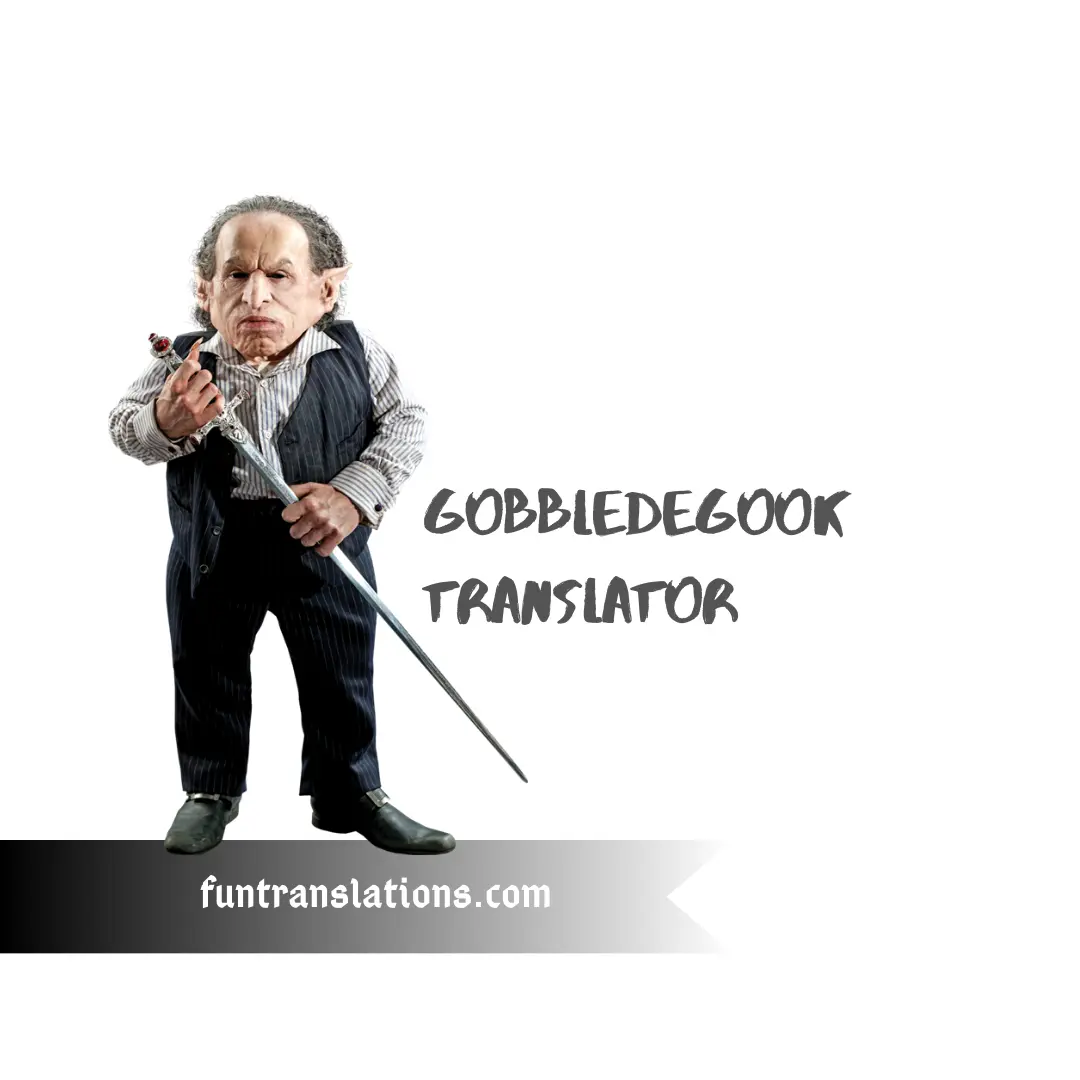
Gobbledegook is the harsh, guttural language spoken by goblins in the Harry Potter universe, particularly those of Gringotts Wizarding Bank. It is filled with aggressive consonant clusters, metallic undertones, and contract-heavy phrasing. This translator converts standard English into a sharp, gravel-throated dialect full of ownership implications, ledger threats, and gold-bound declarations.
Enter some text and click Translate to see the result
Gobbledegook Translator API Available
Integrate this translator into your app or workflow. Starting at $4.99/month
What Is Gobbledegook?
Gobbledegook is the fictional language of the Goblins in J.K. Rowling's Harry Potter series — a harsh, clicking, guttural tongue spoken by the bank-managing Goblins of Gringotts. In the wizarding world, Gobbledegook is considered an extremely difficult language for wizards to learn: demanding, fast-paced, and structured around concepts of property, exchange, and value that Goblin culture centres on. Few wizards bother to learn it — the notable exception being Dumbledore, whose linguistic breadth is part of his exceptional intellect.
The name "Gobbledegook" itself is a playful reference to the real-world English slang term for incomprehensible or overly technical language — "gobbledygook" — a joke embedded in the series that suggests wizards find the Goblin tongue as impenetrable as bureaucratic jargon. The language appears briefly across the novels and is heard in the films during Gringotts scenes, always emphasising the Goblins' alien intelligence and their cultural separateness from the wizarding world. Harry Potter and related elements are trademarks of Warner Bros. Entertainment Inc.
Goblins in the Wizarding World
Goblins in Harry Potter are one of the series' most morally complex non-human species. Unlike the elves or giants, Goblins have carved out a position of genuine power in wizarding society through their control of Gringotts — the only bank in the British wizarding world. This economic leverage gives them a unique status: they are neither fully subjugated like house-elves nor feared like giants, but occupy an uneasy position of necessary-but-resented importance.
Goblin culture, as revealed across the series, has fundamentally different concepts of ownership from wizards. Goblins believe that a crafted item belongs permanently to its maker — lending it does not transfer ownership, and it should return to the maker's descendants upon the borrower's death. This cultural clash over Godric Gryffindor's sword drives part of the plot of Harry Potter and the Deathly Hallows and illuminates how Gobbledegook encodes a cultural worldview irreconcilable with wizard law.
Gobbledegook in the Stories
Key Gobbledegook moments across the Harry Potter series:
| Book / Film | Context |
|---|---|
| Philosopher's Stone | Gringotts Bank — first glimpse of Goblin culture |
| Goblet of Fire | Dumbledore conversing in Gobbledegook with Ragnok |
| Half-Blood Prince | Griphook and other Goblins discussing wizarding news |
| Deathly Hallows | Griphook's role; property philosophy central to plot |
| The Films | Gringotts scenes — Gobbledegook as background texture |
| Fantastic Beasts | Goblins appear in 1920s wizarding world contexts |
The Sound of Gobbledegook
Rowling describes Gobbledegook as harsh and guttural — a language that sounds nothing like the smooth, Latin-inflected vocabulary of wizarding spells. The name suggests rapid, clicking, incomprehensible sounds, and the few actual Gobbledegook words referenced in the series have a rough, consonant-heavy quality consistent with this description. The language's difficulty for wizards underscores the cultural gap between the two communities — a gap rooted in centuries of mutual exploitation and mistrust.
The linguistic choice is thematically significant: Goblins have their own language that wizards don't understand, just as they have their own laws, customs, and concepts of justice that wizard society dismisses or overrides. Gobbledegook is not just a sound — it's a symbol of Goblin separateness and the broader theme of non-human rights in the wizarding world.
How This Gobbledegook Translator Works
This Gobbledegook translator converts your English text into the guttural, rapid-fire language of the Gringotts Goblins — applying the phonological patterns and vocabulary conventions of Gobbledegook to produce authentic-sounding Goblin speech.
Perfect for Harry Potter fans, Gringotts enthusiasts, tabletop RPG players, or anyone who wants to communicate with the sharp, transactional precision of a species that has been counting gold for centuries. Mind the dragon on your way out.