Parseltongue Translator
Convert English to Parseltongue, the rare inherited snake language from the Harry Potter universe. Parselmouths like Salazar Slytherin and Voldemort use this hissing serpentine language to communicate with snakes. To non-speakers it sounds like pure hissing — dark, mysterious, and unmistakably magical.
Enter some text and click Translate to see the result
Parseltongue Translator API Available
Integrate this translator into your app or workflow. Starting at $4.99/month
What Is Parseltongue?
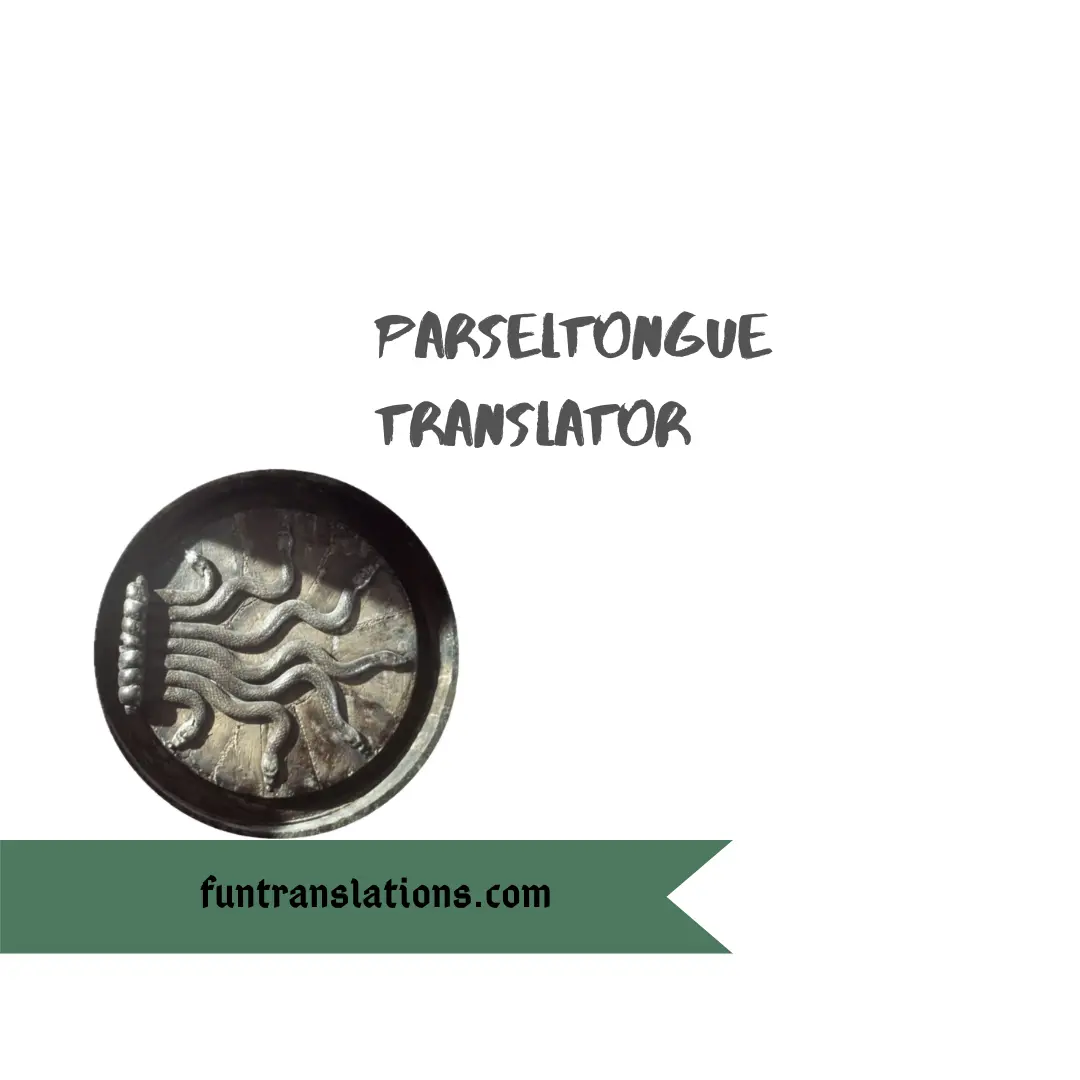
Parseltongue is the rare, inherited magical language of the Harry Potter universe, used to communicate with snakes and other serpentine creatures. Speakers of the language are called Parselmouths — a gift (or curse, depending on who you ask) that is almost always passed down through bloodlines rather than learned. To non-speakers, Parseltongue sounds like a continuous, unstructured hissing, indistinguishable from the sound an ordinary snake makes.
The language is deeply embedded in the lore of dark magic. Throughout the Harry Potter series, the ability to speak Parseltongue is treated with suspicion by most witches and wizards — a mark of dark intent rather than a neutral gift. Its association with Salazar Slytherin, one of Hogwarts' four founders and a champion of pure-blood supremacy, cemented its reputation as a sinister ability long before Voldemort made it infamous.
Notable Parselmouths in Harry Potter
The ability to speak the snake language is extraordinarily rare in the wizarding world. Only a handful of characters are identified as Parselmouths across the entire series:
- Salazar Slytherin — The original and most famous Parselmouth in wizarding history. His descendants inherited the ability, and he is believed to have created the Chamber of Secrets beneath Hogwarts to house the Basilisk.
- Lord Voldemort (Tom Riddle) — As a direct descendant of Slytherin, Voldemort was a Parselmouth from birth. His snake Nagini was his most trusted companion and, later, a Horcrux.
- Harry Potter — Harry gained the ability accidentally when Voldemort transferred a fragment of his soul during the failed Killing Curse in 1981. Harry lost this ability after the destruction of his Horcrux soul fragment in Deathly Hallows.
- Ron Weasley — Reproduced a Parseltongue phrase he had heard Harry speak, which was sufficient to open the Chamber of Secrets entrance in the final book.
- Isadora Duncan and other historical witches — Mentioned in Pottermore lore as rare historical Parselmouths unrelated to Slytherin's line.
How Parseltongue Sounds
One of Parseltongue's defining characteristics is that it cannot be consciously activated by Parselmouths — it flows automatically when speaking to a snake or thinking about snakes. Harry Potter famously did not realize he was speaking the snake language at the zoo in Philosopher's Stone until the crowd around him reacted in horror.
In the films, Parseltongue was rendered by linguist Francis Nolan as a constructed system of hisses, fricatives, and sibilant sounds. The language uses a heavy emphasis on ssss sounds, glottal stops, and breathy consonants to create the impression of actual serpent communication. The result is immediately recognizable — eerie, fluid, and distinctly inhuman to untrained ears.
Parseltongue in Pop Culture
Few fictional languages have achieved the cultural penetration of Parseltongue. Unlike Elvish or Klingon, which are constructed with full grammars, Parseltongue was intentionally designed to be unknowable — something you either possess or you don't. That mystique made it one of the most memorable elements of the Harry Potter franchise, referenced endlessly in fan fiction, cosplay, Halloween costumes, and internet culture.
The moment in Chamber of Secrets when the school turns against Harry after the Quidditch match dueling club scene — believing him to be the Heir of Slytherin because he spoke to a snake — is one of the series' sharpest explorations of how language signals identity. Speaking the wrong language, in the wrong room, can define how the world sees you.
Other Wizarding World Languages
Parseltongue is not the only constructed language in J.K. Rowling's universe. Fun Translations also offers converters for other magical tongues from the same world:
- Gobbledegook — The guttural, complex language of goblins, spoken at Gringotts.
- Mermish — The language of the Merpeople, which sounds like wailing above water but becomes coherent when spoken underwater.
- Goblin Rune Script — Ancient written script used in the wizarding world.
How the Parseltongue Translator Works
This English to Parseltongue translator converts your text into a hissing, serpentine rendering inspired by the phonetic patterns of the language as depicted in the films and expanded universe. Type or paste any English text above, hit Translate, and the converter will produce a Parseltongue-style output complete with the sibilant sounds and rhythm that make the snake language so distinctive.
The Parseltongue API is also available for developers who want to integrate this wizarding language translator into their own Harry Potter fan projects, games, or applications. Check the API documentation for endpoints, rate limits, and authentication details.