NATO Phonetic Alphabet Translator
Convert ordinary text into the NATO phonetic alphabet used in aviation, military, and radio communications. Transform letters into their standardized call signs like Alpha, Bravo, Charlie, and more.
Enter some text and click Translate to see the result
Nato-phonetic Translator API Available
Integrate this translator into your app or workflow. Starting at $4.99/month
What Is the NATO Phonetic Alphabet?
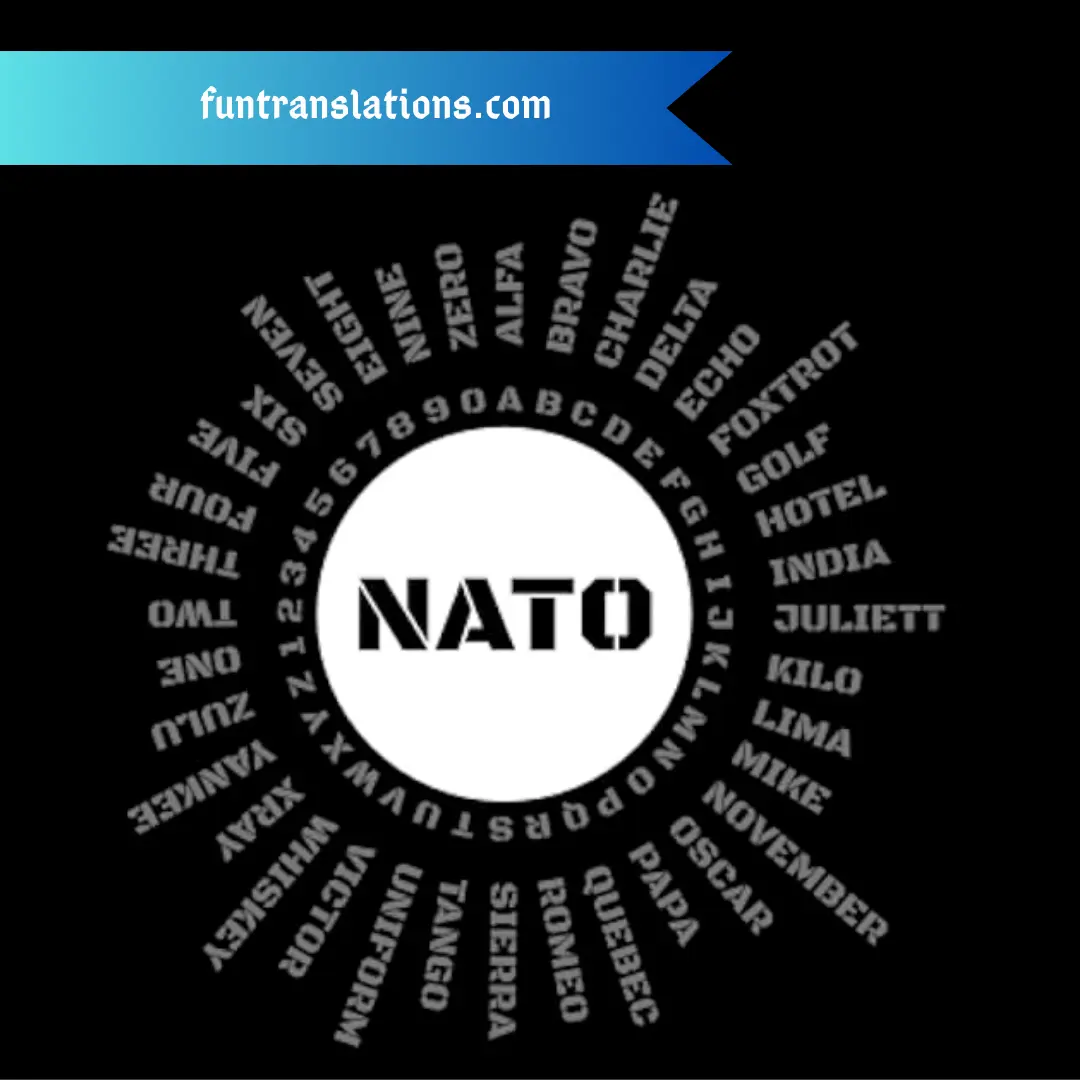
The NATO Phonetic Alphabet — formally known as the International Radiotelephony Spelling Alphabet or the ICAO Phonetic Alphabet — is a standardised set of code words assigned to each letter of the Latin alphabet. Each letter is represented by a specific word chosen to be clearly distinguishable from every other, even in poor audio conditions: Alpha, Bravo, Charlie, Delta, Echo, Foxtrot, Golf, Hotel, India, Juliet, Kilo, Lima, Mike, November, Oscar, Papa, Quebec, Romeo, Sierra, Tango, Uniform, Victor, Whiskey, X-ray, Yankee, Zulu.
The alphabet is used whenever clarity is essential and individual letters might otherwise be confused — in aviation radio communications, military operations, emergency services, maritime navigation, and any situation where mishearing a single letter could have serious consequences. When a pilot says "November Foxtrot Lima" instead of "NFL", there is no ambiguity about which letters were transmitted.
History — From RAF to ICAO
Before the current NATO alphabet was adopted, numerous national and organisational phonetic alphabets existed, creating dangerous confusion in allied communications. The British Royal Air Force used "Apple, Beer, Charlie, Dog, Edward" while the US military used "Able, Baker, Charlie, Dog, Easy, Fox" — and in multinational operations, these differences caused real operational problems.
The current alphabet was developed through extensive research by the International Civil Aviation Organisation (ICAO) in the early 1950s. Each word was tested by speakers of multiple languages and accents to ensure it remained unambiguous when pronounced by a French pilot, a Spanish controller, or a Japanese navigator. The alphabet was formally adopted by NATO in 1956 and remains the worldwide standard for military, aviation, and emergency communications to this day.
The Full NATO Phonetic Alphabet
The 26 code words, each carefully chosen for clarity and international pronounceability:
| Letter | NATO Code Word |
|---|---|
| A | Alpha |
| B | Bravo |
| C | Charlie |
| D | Delta |
| E – F | Echo – Foxtrot |
| G – H | Golf – Hotel |
| I – J | India – Juliet |
| K – L | Kilo – Lima |
| M – N | Mike – November |
| O – P | Oscar – Papa |
| Q – R | Quebec – Romeo |
| S – T | Sierra – Tango |
| U – V | Uniform – Victor |
| W – X | Whiskey – X-ray |
| Y – Z | Yankee – Zulu |
The NATO Alphabet in Everyday Life
While originally developed for military and aviation use, the NATO phonetic alphabet has spread far beyond those contexts. Customer service agents use it when spelling out reference numbers. Police dispatchers use it over radio. IT support technicians use it when dictating passwords or error codes. It appears in television, film, and popular culture so frequently that many people recognise it without knowing its formal name — "Alpha, Bravo, Charlie" is instantly recognisable even to those who have never served in the military or worked in aviation.
The alphabet has also entered popular culture as a kind of authority shorthand: the word "Delta" feels authoritative in a way that simply saying "D" does not. This has led to widespread use in contexts far removed from radio communications — from naming military operations to titling television series ( Operation Overlord, Project Alpha) and even influencing the names of commercial airlines and pharmaceutical products.
How This NATO Phonetic Translator Works
This NATO phonetic alphabet translator converts your text into the full NATO code word spelling — so "Hello" becomes "Hotel Echo Lima Lima Oscar". Enter any word, phrase, or sentence and see its NATO phonetic spelling.
Perfect for pilots, military enthusiasts, radio operators, customer service professionals, or anyone who needs to spell something out with absolute clarity. Foxtrot Uniform November!