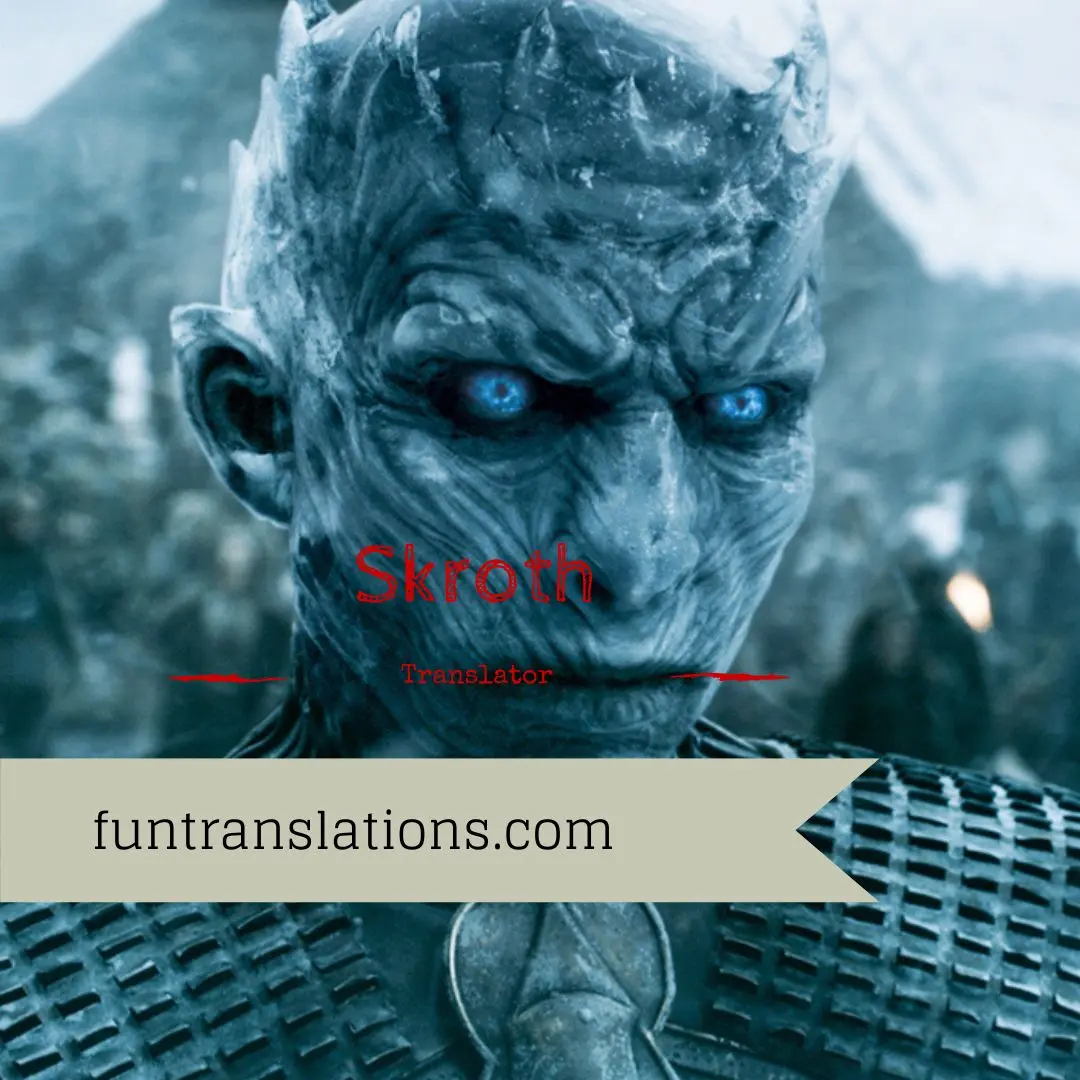
Skroth Translator
Skroth is the language used by the White Walkers in the television adaptation Game of Thrones. Peter Brown, the sound designer for the show, developed the sound of the language, which resembles the breaking of ice.
Enter some text and click Translate to see the result
Skroth Translator API Available
Integrate this translator into your app or workflow. Starting at $4.99/month
What Is Skroth?
Skroth is the language spoken by the White Walkers (also called the Others) in the television adaptation of Game of Thrones. The White Walkers are the ancient, supernatural antagonists of the series — icy, terrifying beings from north of the Wall who command an army of the dead (wights) and represent an existential threat to all life in Westeros. Their language sounds like the breaking and grinding of ice: a harsh, cracking, deeply alien tongue that conveys ancient malice.
Skroth was developed for the television series by sound designer Peter Brown, who created the language by recording actual breaking ice, glacier sounds, and other frozen textures, then layering and manipulating these recordings into something that resembles structured speech. The result is one of fantasy television's most effective constructed languages precisely because it doesn't sound human — it sounds geological, ancient, and utterly inhuman. Game of Thrones and related characters are trademarks of HBO.
The White Walkers in Game of Thrones
The White Walkers are ancient beings who first appeared during the Long Night — a period of darkness and cold thousands of years before the events of the series — and were defeated by a coalition of the First Men and the Children of the Forest. The Wall, a massive structure of ice and magic stretching across the northern border of Westeros, was built to keep them out. By the time of Game of Thrones, most people in Westeros consider the White Walkers myths or children's stories.
The White Walker lore was significantly expanded in Game of Thrones compared to George R.R. Martin's novels. The Night King — their leader in the TV series — was revealed to have been created by the Children of the Forest as a weapon against the First Men, a weapon that escaped their control. His ability to raise the dead and his supernatural connection to Jon Snow (through Valyrian steel) made him the series' ultimate antagonist, culminating in the Battle of Winterfell in Season 8.
The Sound of Ice — Skroth's Phonology
Skroth is unique among constructed languages in being built from environmental sound rather than human phonemes. Its characteristics:
| Feature | Description |
|---|---|
| Source material | Recorded cracking ice and glacier movement |
| Tone | Deep, resonant, ancient — no warm frequencies |
| Rhythm | Slow, measured — each word carries weight |
| Creator | Peter Brown, Game of Thrones sound department |
| First appearance | Season 2 of Game of Thrones |
| Speaker | The Night King and White Walker generals |
| Script | No written form — purely spoken/sonic |
| Intelligibility | Understood by other White Walkers; alien to humans |
The Long Night and the Wall
The mythology of the Long Night — the White Walkers' first great assault on the living world — is one of Game of Thrones's richest pieces of worldbuilding, drawing on real-world mythological traditions of a great winter or darkness (Norse Fimbulwinter, various apocalyptic winter myths). The Wall's magical properties — its ability to prevent the dead from crossing — were maintained partly by the Night's Watch and partly by the ancient spells woven into its foundation by the Children of the Forest.
The destruction of the Wall in the Season 7 finale — brought down by the Night King riding the resurrected dragon Viserion — remains one of the most spectacular sequences in television history. With the Wall gone, Skroth-speaking White Walkers marched south for the first time in thousands of years, and the final war for the living world began.
How This Skroth Translator Works
This Skroth translator converts your English text into a representation of the White Walkers' ice-cracking language — capturing the cold, alien quality of speech that sounds like the world itself freezing.
Perfect for Game of Thrones fans, winter is coming enthusiasts, or anyone who wants to make their next message sound like it was delivered by something ancient, icy, and deeply unconcerned with your survival.