Smurf Translator
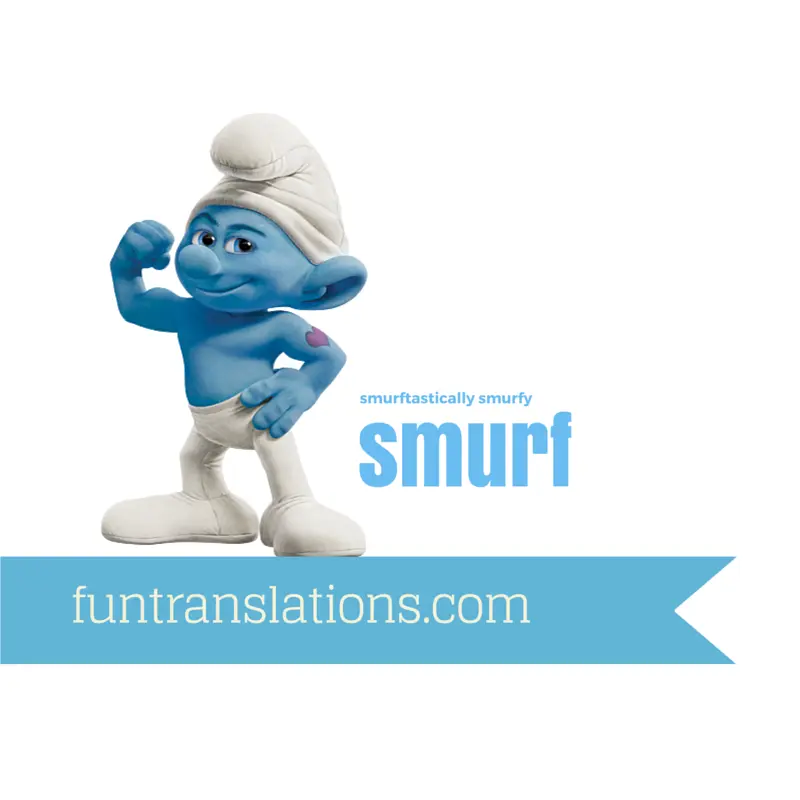
Convert from English to Smurf Speak. A characteristic of the Smurf language is the frequent use of the undefinable word "smurf" and its derivatives in a variety of meanings. The Smurfs frequently replace both nouns and verbs in everyday speech with the word "smurf": "We're going smurfing on the River Smurf today." When used as a verb, the word "Smurf" typically means "to make", "to be", "to like", or "to do".!
Enter some text and click Translate to see the result
What Is Smurf Language?
The Smurf language (also called Smurf speak or Smurf talk) is the distinctive way of speaking used by the Smurfs — the small, blue, mushroom-dwelling creatures created by Belgian cartoonist Peyo (Pierre Culliford) in 1958. The defining feature of Smurf language is the liberal replacement of nouns and verbs with the word "smurf" and its derivatives — smurfy, smurfing, smurfed — in a way that changes meaning depending entirely on context.
"We're going smurfing on the River Smurf today" means "We're going swimming in the river today." "Don't smurf around, this is serious" means "Don't mess around." "That's a very smurfy idea" means "That's a very good idea." The word "smurf" functions as a universal replacement that the listener must decode from context — a linguistic trick that is simultaneously simple, creative, and surprisingly effective for storytelling.
The Smurfs — History and Origins
The Smurfs first appeared as side characters in Peyo's comic series Johan and Peewit in 1958, in a Belgian comics magazine. They were an immediate sensation and quickly earned their own dedicated series. The creatures — officially standing "three apples tall" and living in mushroom houses in a forest village — became one of the most successful Belgian cultural exports of the 20th century.
The Smurfs became a global phenomenon through the Hanna-Barbera animated television series (1981–1989), which aired in over 30 countries and introduced the characters to several generations of children worldwide. Characters like Papa Smurf (the wise leader), Smurfette (the only female Smurf), Brainy Smurf, Grouchy Smurf, and the villain Gargamel (and his cat Azrael) became household names. The franchise was revived with CGI films in 2011 and 2013, and an animated film series from Paramount in 2024.
Smurf Speak Examples
Here are some common sentences translated into Smurf speak:
| English | Smurf Speak |
|---|---|
| Hello! | Smurf! |
| That's a great idea! | That's a smurfy idea! |
| Let's go swimming. | Let's go smurfing. |
| I love you. | I smurf you. |
| This is amazing! | This is smurftastic! |
| Stop it! | Stop smurfing around! |
| Be careful! | Smurf carefully! |
| Thank you very much. | Smurf you very smurfly! |
The Linguistics of "Smurfing"
From a linguistic perspective, Smurf speak is a fascinating example of phonological substitution applied to lexical items — replacing specific word forms with a general placeholder that must be interpreted through context. Linguists have noted that the Smurf language demonstrates how much semantic information human beings extract from context rather than from word meaning alone: if you can understand "I'll smurf you later", you're demonstrating powerful contextual inference skills.
The system also mirrors real linguistic phenomena: children learning language go through a phase of similar word-substitution, and adult speakers sometimes use placeholder words ("thingamajig", "whatsit", "doohickey") in exactly the same way. Smurf speak simply takes this to a comedic extreme, making the substitution so pervasive that it becomes the defining feature of an entire character community's speech.
How This Smurf Translator Works
This English to Smurf translator converts your text into authentic Smurf speak by replacing key nouns, verbs, and adjectives with "smurf" and its derivatives — smurfy, smurfing, smurfed, smurftastic — following the patterns established across decades of Smurfs comics, cartoons, and films.
Enter any English text and see how Papa Smurf, Smurfette, or Grouchy Smurf might express it. Perfect for Smurfs fans young and old, themed parties, or anyone who has always suspected that "smurf" could replace most of the words in any sentence. That's smurfy!