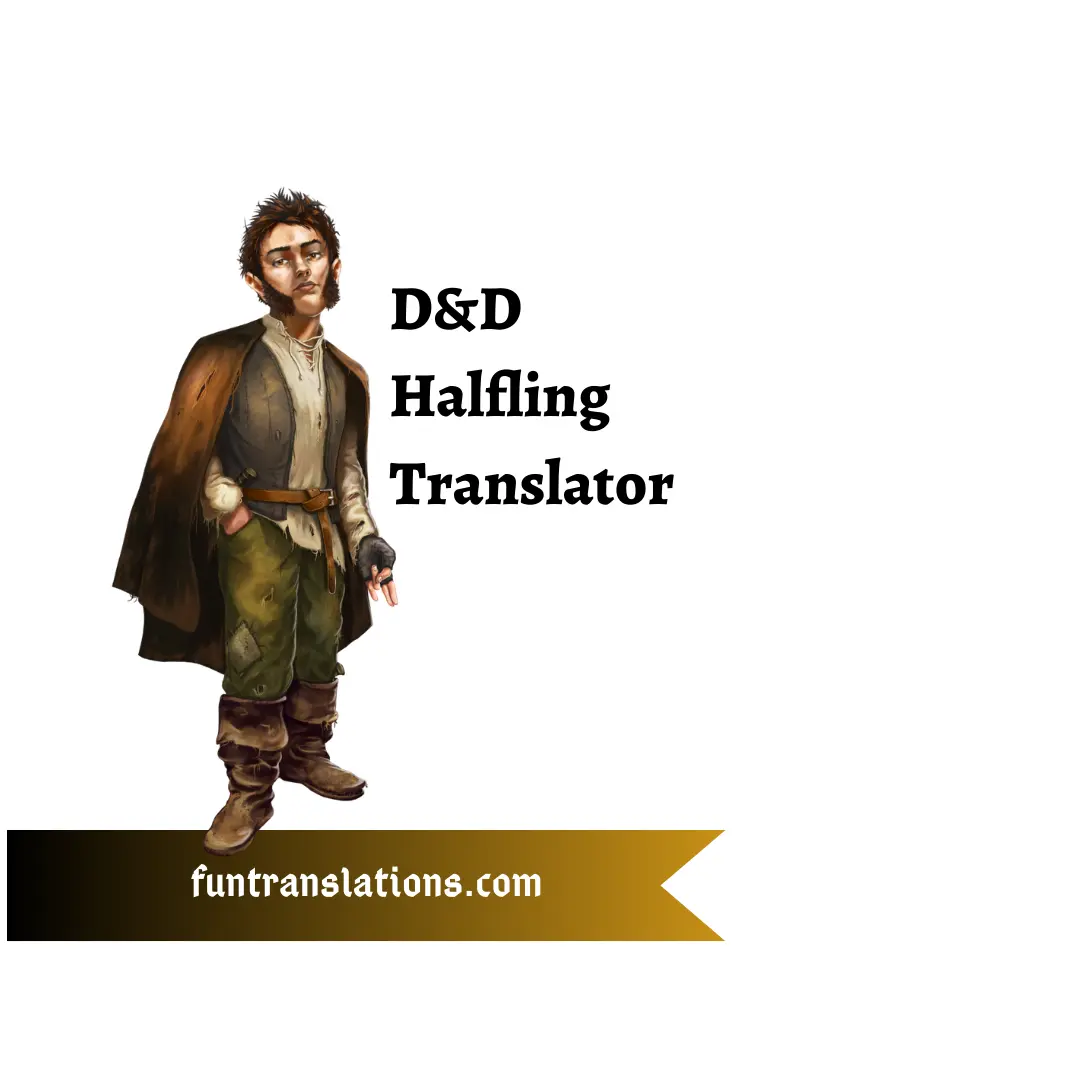
D&D Halfling Translator
The Halfling language of Dungeons & Dragons carries a warm, rustic countryside charm inspired by Luiric speech and shirefolk traditions. Halflings favor friendly tones, cozy expressions, food metaphors, and tavern-flavored warmth. This translator converts ordinary English into cheerful, hearth-loving Halfling dialect — perfect for adventurers, innkeepers, and second breakfast enthusiasts.
Enter some text and click Translate to see the result
Halfling Translator API Available
Integrate this translator into your app or workflow. Starting at $4.99/month
What Is Halfling Language?
Halfling language — sometimes called Hobbit-speak or Shire-tongue — refers to the fictional dialects and linguistic quirks associated with Halflings (Hobbits) across the major fantasy universes: Tolkien's Middle-earth, Dungeons & Dragons, and their many descendants. In Tolkien's world, Hobbits primarily spoke Westron (the Common Tongue) with distinct regional characteristics — a warm, rustic, slightly old-fashioned vocabulary full of comfortable domestic concerns, elevenses, and a cheerful disregard for the larger world's troubles.
In Dungeons & Dragons, Halflings have their own language documented across sourcebooks, characterised by warmth, practicality, and a tendency toward understatement that belies their surprising resilience. D&D Halfling speech patterns emphasise community, comfort, good food, and a philosophical calm that comes from a species that has survived by not making too much fuss. The language reflects the species' defining characteristic: small in stature, vast in quiet courage.
Halflings Across Fantasy Universes
Tolkien's Hobbits — the original Halflings — live in the Shire, a comfortable agricultural region of Middle-earth characterised by pipe-weed, second breakfasts, and a profound contentment with small things. Bilbo Baggins and Frodo Baggins represent the Hobbit ideal: homebodies capable of extraordinary heroism when circumstances demand it. Their speech patterns throughout The Hobbit and The Lord of the Rings are notably different from Men or Elves — warmer, more colloquial, more concerned with practical matters.
D&D Halflings diverge from Tolkien's vision somewhat — they tend to be wanderers and travellers rather than homebodies, though they maintain the warmth and practicality of their literary ancestors. The Halfling languages in D&D reflect this wandering nature, with vocabulary adapted to the road, to trade, and to the careful cultivation of friendships across diverse communities. In both traditions, Halfling speech is characterised by warmth, humour, and an earthy wisdom that larger races often underestimate.
Halfling Expressions and Vocabulary
Common Halfling expressions across Tolkien and D&D traditions:
| Halfling Term | Meaning / Context |
|---|---|
| Mathom | Something kept but useless — a Hobbit heirloom |
| Smial | A Hobbit hole or burrow-home |
| Tween | A Hobbit's irresponsible years (20s–30s) |
| Elevenses | The mid-morning meal — not just breakfast |
| Shire-reckoning | The Hobbit calendar system |
| Burrows | Common Halfling family name; underground homes |
| Bywater | Settlement near water (common Shire place name) |
| Respectable | The highest Hobbit compliment — conforming, settled |
The Philosophy of Halfling Speech
What distinguishes Halfling speech from other fantasy languages is its relationship to comfort and the mundane. Where Elvish is poetic and ancient, where Dwarven is gruff and functional, Halfling language is relentlessly domestic. The Halfling vocabulary prioritises food, homes, families, gardens, and the small pleasures of a life well-lived. This is not limitation — it's a philosophy. The Halfling linguistic tradition understands that the truly important things in life are small and close to hand.
Tolkien's Hobbits demonstrate this through contrast: their comfortable, domestic speech patterns make the danger and grandeur of their adventures more vivid. When Bilbo describes the dragon's cave using the same matter-of-fact tone he'd use for describing a larder, the effect is more powerful than any heroic proclamation. Halfling language is the language of courage that doesn't know it's being courageous.
How This Halfling Translator Works
This Halfling translator converts your English text into the warm, practical, slightly rustic speech patterns of Halflings and Hobbits — drawing on vocabulary and linguistic conventions from both Tolkien's Shire and D&D's Halfling tradition.
Perfect for D&D players, Tolkien fans, tabletop roleplayers, or anyone who wants to say something with the cheerful, grounded practicality of a species that knows what really matters. Now, if you'll excuse me, it's nearly elevenses.