Sindarin translator
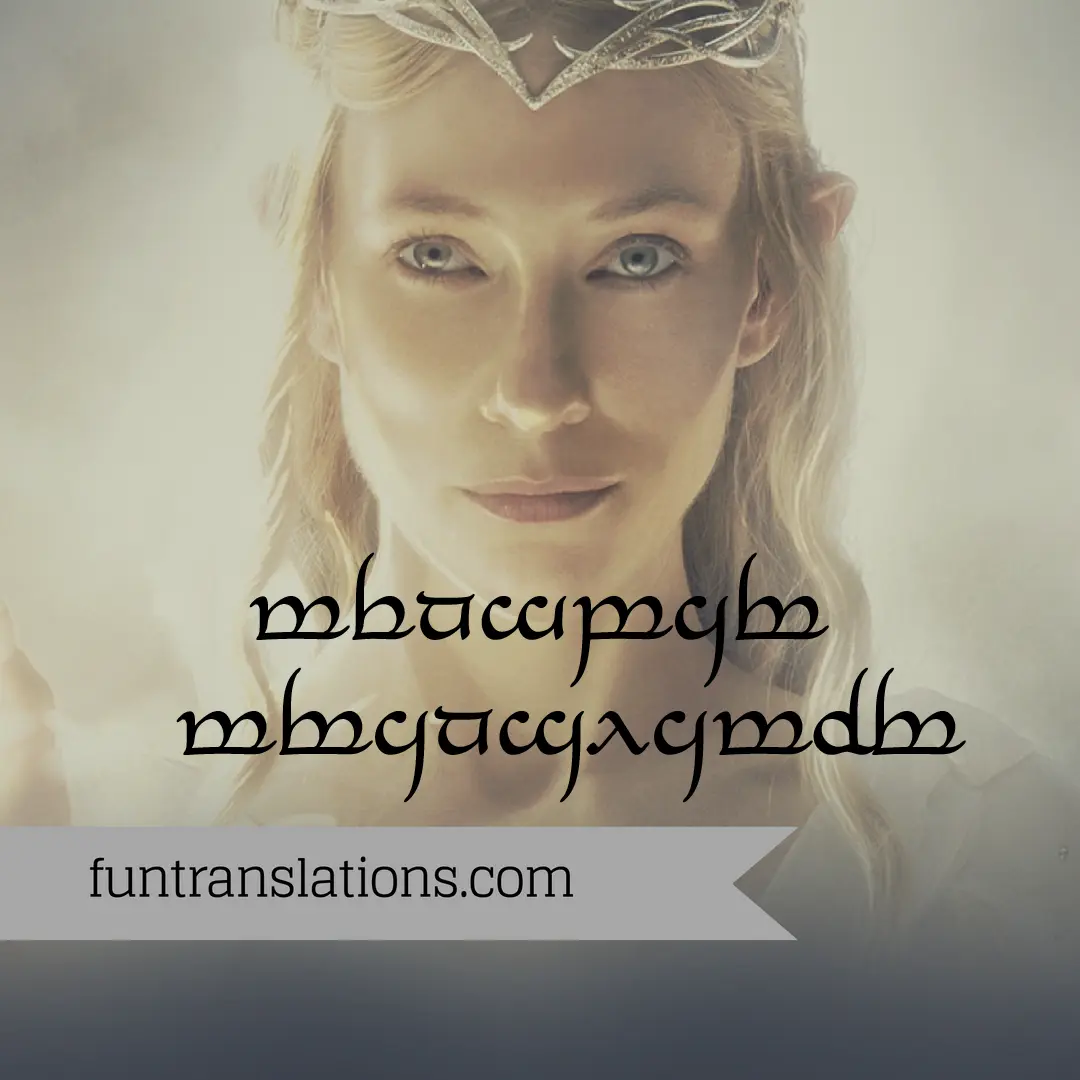
Convert from English to Sindarin. Sindarin is one of the many languages spoken by immortal Elves. J.R.R. Tolkien created this fictional Elvish language (which uses Tengwar writing system) for the novel Lord of The Rings.
Enter some text and click Translate to see the result
Sindarin Translator API Available
Integrate this translator into your app or workflow. Starting at $4.99/month
What Is Sindarin?
Sindarin is one of the two major Elvish languages created by J.R.R. Tolkien for his Middle-earth mythology. It is the everyday spoken tongue of the Grey Elves — the Sindar — who remained in Middle-earth rather than sailing west to Valinor. By the time of The Lord of the Rings, Sindarin had become the dominant Elvish language spoken across Middle-earth, used by Elves, learned Men, and anyone wishing to communicate with the Elven peoples.
Tolkien modelled Sindarin's sounds and grammar primarily on Welsh, giving it a flowing, consonant-rich quality very different from the more Finnish-inspired Quenya. This Welsh influence is audible in the films — the lilting, melodic quality of Elvish dialogue in Peter Jackson's Lord of the Rings and The Hobbit trilogies is almost entirely Sindarin, brought to life by linguist David Salo who worked closely with Tolkien's published notes.
Sindarin vs Quenya — Key Differences
Quenya is the High Elvish — ancient, formal, ceremonial. It was the language of the Noldor Elves who lived in Valinor, used in songs, poetry, and learned discourse. Sindarin is the vernacular Elvish — the language of daily life in Middle-earth, spoken by Wood-elves, Grey Elves, and any Elf born or dwelling east of the sea. When Legolas speaks Elvish in the films, he speaks Sindarin; when Galadriel chants a formal incantation, she may use Quenya.
One notable feature of Sindarin is consonant mutation — initial consonants change depending on grammatical context, similar to Welsh. So the word for "tree" (galadh) can become aladh in certain constructions. This gives Sindarin a dynamic, shifting quality that reflects Tolkien's deep philological expertise and his love of Welsh-style sound change.
Common Sindarin Words and Phrases
Here are well-known Sindarin words and phrases from Tolkien's works and the films:
| Sindarin | English |
|---|---|
| Mellon | Friend (the password for the Doors of Durin) |
| Mae govannen | Well met (a greeting) |
| Elen síla lúmenn' omentielvo | A star shines on the hour of our meeting |
| Legolas | Greenleaf |
| Aragorn | Kingly / noble valour |
| Mithrandir | Grey pilgrim (Gandalf's Elvish name) |
| Lothlórien | Land of the blossoming gold trees |
| Namaarie | Farewell |
Sindarin in Peter Jackson's Films
Linguist David Salo was commissioned to adapt and expand Tolkien's Sindarin for Peter Jackson's film trilogy, producing the Elvish dialogue heard throughout the films. Salo worked from Tolkien's unpublished manuscripts and phonological rules to create grammatically consistent dialogue — including Arwen's lines, Galadriel's narration, and Legolas's commentary in battle.
The films reignited global interest in Tolkien's languages. Amazon's The Rings of Power (2022) continued this tradition, hiring language consultant Sindarin scholar Helge Fauskanger and others to ensure Elvish dialogue was linguistically consistent with Tolkien's Second Age setting. Tolkien's Elvish languages have never been more visible in popular culture than they are today.
How This Sindarin Translator Works
This English to Sindarin translator converts your input using documented Sindarin vocabulary from Tolkien's published works, the History of Middle-earth series, and scholarship compiled by the Elvish linguistic community. Enter any English word or phrase and see the Sindarin equivalent. Words without direct matches use phonetic approximation based on known Sindarin roots and word-formation patterns.
Whether you want to write a message in Elvish, find the Sindarin name for a person or place, or simply explore Tolkien's greatest linguistic achievement, this translator opens the door to Middle-earth's living language. Mae govannen!
More Elvish Translators
- English to Elvish Translator (Sindarin & Quenya)
- Quenya translator
- Tengwar Translator
- Tel'Quessir Elvish Language Translator — Forgotten Realms