Paper Tape Translator
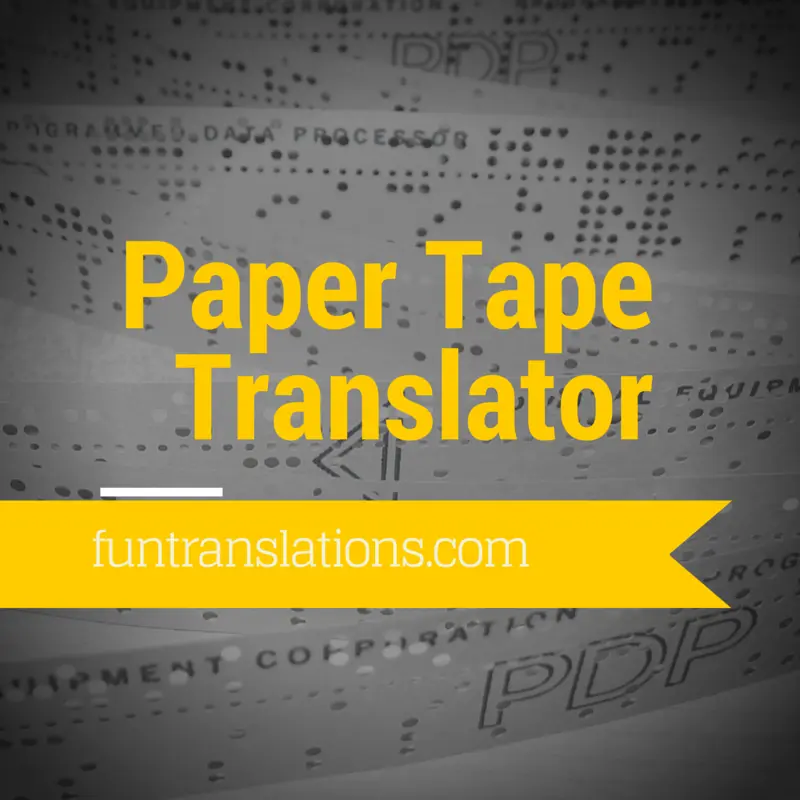
Convert from English to Paper Tape. Punched tape or perforated paper tape is a form of data storage, consisting of a long strip of paper in which holes are punched to store data. Now effectively obsolete, it was widely used during much of the twentieth century for teleprinter communication, for input to computers of the 1950s and 1960s, and later as a storage medium for minicomputers and CNC machine tools.
Enter some text and click Translate to see the result
What Is Paper Tape Encoding?
Paper tape (also called punched tape or perforated tape) is one of the oldest data storage media for computers, predating even punched cards in some applications. Data is stored as patterns of holes punched across the width of a continuous tape, read by a tape reader that detects the presence or absence of holes in each position. The most common formats used 5-hole tape (based on the Baudot code used in telegraphy) and later 8-hole tape (based on ASCII), allowing alphanumeric characters and control codes to be stored and transmitted.
Paper tape predates digital computers — it was used in 19th-century telegraph systems, including the Baudot telegraph (1870), where operators punched tape for transmission at a speed independent of the operator's live typing. Early computers, including the ENIAC and the early machines at Manchester, used paper tape as an input medium. The small sprocket holes running along the edge of the tape drove the mechanical feeding mechanism; the data holes were positioned across the remaining width.
From Telegraph to Computer
The connection between telegraphy and early computing through paper tape is direct and historically significant. The Baudot code — invented by French engineer Émile Baudot in 1870 — encoded the alphabet in 5 bits (32 combinations), using a shift system to access both letters and figures. This code, later standardised as ITA2, was used in teleprinters and paper tape systems well into the 1960s. Many early computers were programmed and operated via teleprinters — machines that combined a keyboard, printer, and paper tape reader/punch — creating a direct mechanical lineage from Victorian telegraphy to digital computing.
The PDP minicomputers of the 1960s and early 1970s used paper tape extensively. DEC's PDP-8, one of the most influential early minicomputers, loaded programs and operating systems via paper tape readers. The distinctive sound of a high-speed tape reader — a rapid mechanical chatter as the tape flew through at hundreds of characters per second — was the sound of computing in the 1960s university lab. Software was distributed on reels of paper tape; a dropped reel was a disaster, with the tape tangling irreversibly.
Paper Tape Formats
Common paper tape encoding standards:
| Format | Holes | Use |
|---|---|---|
| Baudot / ITA2 | 5-hole | Telegraphy and early computers |
| ASCII | 7/8-hole | Standard computing (1963 onwards) |
| EBCDIC | 8-hole | IBM mainframe systems |
| Murray code | 5-hole | Early British telegraphy |
| Friden Flexowriter | 8-hole | Office and lab computing |
Paper Tape's Enduring Presence
Paper tape remained in use far longer than its obsolescence might suggest. CNC (Computer Numerical Control) machine tools in manufacturing used paper tape to control cutting operations well into the 1990s — a machine tool purchased in 1975 might still be running on paper tape programs two decades later, because replacing it with a newer control system was more expensive than continuing to use tape. Some specialised industrial environments maintained paper tape systems even later.
Paper tape is also part of modern hacker culture's aesthetic of retrocomputing. Retrocomputing enthusiasts restore working PDP minicomputers, read original program tapes, and celebrate the physical, mechanical nature of early computing. ASCII art representations of paper tape patterns are a recognised aesthetic. The physical reality of data as holes in paper — visible, tangible, and permanent in a way magnetic or electronic storage is not — gives paper tape a particular nostalgic and conceptual appeal.
How This Paper Tape Translator Works
This paper tape translator encodes text into paper tape representation — converting characters into the hole patterns of paper tape encoding systems, visualised as the classic binary pattern of punched and unpunched positions that defined early computing data storage.
Perfect for computing history enthusiasts, retrocomputing fans, educators teaching about early data encoding, or anyone fascinated by the physical origins of digital information storage. Feed it in, and watch your message become holes in paper.